The upcoming Huawei Mate 90 series will debut the Kirin 2026 chip, utilizing advanced Logic Folding technology for heightened performance and efficiency.
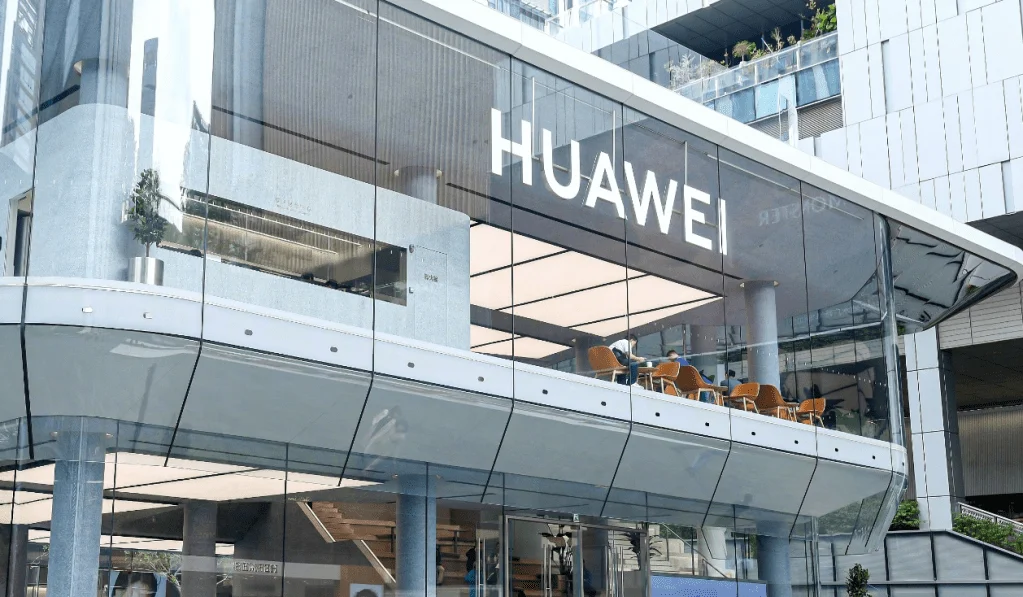
Huawei's Kirin 2026 Chipset Announcement
Sources from China STAR Market Daily indicate that the upcoming Huawei Mate 90 series, anticipated for release this autumn, will introduce the new Kirin 2026 chipset, designed under the company's recently announced Tao (τ) Law approach. This announcement is particularly noteworthy within a tech ecosystem still grappling with trade restrictions and supply chain issues. Huawei, a company that has faced significant challenges in recent years, seems poised to make a bold statement with its latest chipset. The Kirin series has a history of pushing boundaries; from the Kirin 970’s AI capabilities to the Kirin 9000’s integration of 5G, each iteration has sought to redefine mobile processing power while underlining Huawei's commitment to innovation despite external pressures.
Tao (τ) Law Explained
Launched earlier this year, the Tao (τ) Law framework aims to enhance semiconductor development by continually reducing the system time constant (τ). This is achieved through innovative methods such as Logic Folding, which not only optimizes on-chip signal propagation but also increases the density of transistors, advancing semiconductor and electronic system capabilities. Essentially, the lower the time constant, the faster and more efficient the system can operate. Huawei’s push for such advancements suggests they're not just reacting to market demands; they're actively shaping the future of semiconductor technology.
Logic Folding is a technique that, while not entirely new, has been refined by Huawei to achieve higher performance levels. By reorganizing how logical operations are handled, it allows for hundreds of millions more transistors to fit into the same silicon area—an achievement that could lead to dramatic shifts in power performance and energy efficiency. This methodology starkly contrasts traditional scaling techniques like Moore's Law, which asserts that transistor counts double approximately every two years, hinting at a need for innovative strategies as the physical limits of silicon are approached.
Technical Advancements in Kirin 2026
The Kirin 2026, set for its debut in autumn 2026, will be the first chipset to fully utilize Logic Folding technology. According to Huawei's research, this new architecture employs dual-layer Logic Folding, resulting in a significant increase in transistor density—from 155 million transistors per square millimeter to 238 million—marking an impressive 53.5% increase over its predecessor, the Kirin 9030 Pro. While those figures are striking, how they translate into real-world performance is where the excitement and skepticism meet.
Huawei's Kirin chips have long been expected to improve compatibility with artificial intelligence, while also pushing the boundaries of mobile graphics and computational power. Given that mobile devices are increasingly becoming central to high-performance applications—from gaming to complex data processing—this new balcony of performance won't just appeal to hardcore users but also to mainstream consumers seeking superior smartphone experiences. The question is: will Huawei be able to match performance with affordability? In a saturated market where almost every company claims to have the "best" chipset, the real challenge lies in how Kirin 2026 holds its ground against formidable competitors like Qualcomm and Apple.
If you're working in this space, consider how the enhanced transistor density could facilitate more sophisticated applications in smartphones and IoT devices. A jump like this can directly influence everything from artificial intelligence operations to battery life efficiency. But, can the Kirin 2026 prove its worth against companies that have a head start in application optimization and ecosystem building?
Comparative Landscape of Chipset Development
The competitive ecosystem of mobile chipsets has always witnessed constant innovation. For instance, Qualcomm's Snapdragon series and Apple's A-series processors have set industry standards, both boasting impressive improvements in computational power and energy efficiency. Qualcomm has emphasized 5G capabilities and AI acceleration in their recent iterations, while Apple is known for seamlessly integrating hardware with iOS for ultimate performance. Huawei needs to make a clear case that its Kirin 2026 isn't just another chip, but a real alternative worthy of consumer attention.
Don't overlook the history here. Back in 2018, Huawei’s Kirin 980 was celebrated for its AI prowess, albeit marred by controversies surrounding the company's international operations. Flash forward to today, Huawei appears ready to turn a new leaf. The stakes are high; while Kirin 2026 may have the hardware edge on paper, its success will hinge on the broader integration within Huawei's ecosystem of products and services. With geopolitical tensions still fresh in memory, the road ahead is riddled with uncertainty.
Implications for the Semiconductor Industry
This announcement is more significant than it looks. The Kirin 2026’s development is a telltale sign of how companies can innovate within constraints. As more businesses explore the possibility of revolutionary chip technologies, the competitive gap between Western and Eastern companies may either close or widen further. Huawei has not just committed to exploring new technologies; it's also demonstrating that resilience in the face of adversity can yield groundbreaking results.
Moreover, as we evaluate the impact of the Kirin 2026 on consumers and the industry at large, the question arises: how will this chip influence not just smartphones but other areas such as smart homes or automotive applications? More advanced chipsets translate into smart devices that can learn, adapt and, most importantly, deliver a more sophisticated user experience.
However, the real challenge lies within Huawei's reputation and global standing. That lingering skepticism may temper enthusiasm as users weigh options. With rivals consistently improving their own offerings, Huawei's next moves will be critical in determining whether the Kirin 2026 becomes a beacon of innovation or just another player in a competitive field.
Discussion
Sign in to join the discussion.