The Ampere PMU Profiler offers detailed microarchitectural analysis, enabling engineers to pinpoint execution inefficiencies on Ampere CPUs.
Introduction to the Ampere PMU Profiler
The Ampere PMU Profiler (APP) represents a significant upgrade in performance evaluation for engineers working with Ampere processors, such as the Ampere Altra and AmpereOne. Traditional profiling tools often skim the surface, providing simplistic metrics that describe time spent in functions without truly uncovering the "why" behind performance slowdowns. With APP, performance engineers can probe into the depths of microarchitectural operations within applications. This allows for a nuanced understanding that goes beyond just surface-level analysis.
For systems using advanced architecture like Ampere's, this level of insight isn't just beneficial; it's essential. CPU architectures are increasingly complex. They integrate advanced features such as out-of-order execution, simultaneous multithreading, and various caching mechanisms. Each of these components can introduce potential bottlenecks affecting overall system performance. Conventional tools often can't keep pace, focusing merely on high-level application behavior while ignoring significant hardware interactions. APP fills this gap by evaluating low-level hardware events, providing a diagnostic tool that aligns closely with the intricacies of processing at a granular level.
From Symptoms to Solutions
What's particularly impressive about the PMU Profiler is its ability to transform performance diagnostics from broad symptom identification into precise causal analysis. Traditional profiling methods might flag a function as resource-intensive. However, realizing that a performance hit stems from suboptimal instruction fetching or critical data cache misses is a different ball game altogether. APP empowers developers with actionable insights that can lead to focused remediation instead of guesswork.
Take, for example, a scenario where an application experiences slow responsiveness. Common profiling tools might show that a specific method takes up the majority of CPU time, prompting developers to optimize that method. But APP can expose that the underlying problem isn't the method per se but rather an excessive number of cache misses due to inefficient data access patterns. By identifying the root cause, developers can implement targeted fixes that lead to much more efficient application performance. This shift in focus from symptoms to direct causative factors reflects a maturity in performance engineering that can significantly enhance application throughput and latency.
Methodology and Application
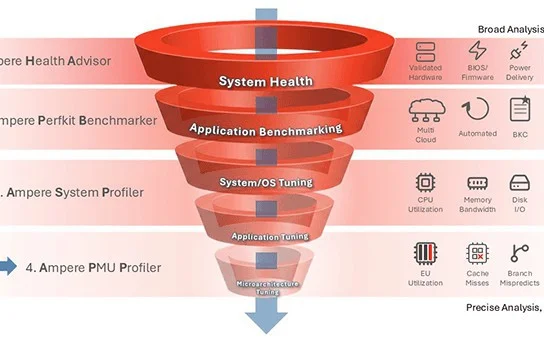
The recommended approach for using APP is a top-down performance analysis framework. This methodology allows engineers to start from a high-level view of performance and drill down into specifics, making it a critical step in expert-level optimization. This isn't just about finding quick fixes; it's about understanding the architecture deeply enough that you can predict potential performance pitfalls before they become issues.
Recognizing hardware-level bottlenecks on Ampere platforms can significantly improve overall application performance. This methodology aligns well with the increasing complexity of modern software that runs on similarly complex hardware. For example, if engineers can isolate a performance bottleneck related to cache architecture, they can re-architect their codebase to better fit the hardware strategy rather than merely tweaking existing code superficially. In essence, APP serves as both a diagnostic tool and a learning platform for software engineers, allowing them to optimize their applications more effectively.
The Evolving Need for Detailed Profiling
As applications grow in scale and complexity, the importance of detailed profiling cannot be understated. Companies increasingly rely on cloud-native architectures and microservices, which often lead to a fragmented understanding of performance metrics. Standards that applied in monolithic architectures don't always hold. Here’s the thing: engineers need more than just high-level overviews. They need the fine-grained insights that can only come from tools that dig deeper into the operational fabric of both hardware and software.
Moreover, teams working with distributed systems will find that APP’s insights can help with inter-service communications as well. Understanding how microarchitectural features affect different parts of your application can lead to more informed decisions during architecture planning, which could ultimately decrease latency and lower resource consumption across disparate services. This is about building a foundation for not just tracking performance but also predicting and preemptively solving problems before they escalate.
Implications and Future Outlook
The accessibility of advanced tools like the Ampere PMU Profiler will likely catalyze a paradigm shift in how performance engineering is perceived and implemented across the tech industry. With more engineers gaining access to low-level performance data, we can expect a spike in optimizations previously considered too complex or time-consuming. This trend could ultimately lead to faster, more efficient applications that better utilize hardware capabilities.
If you’re working in this space, it’s time to prioritize learning how to interpret and act on the data that tools like APP provide. The shift from guesswork to precision isn't just a matter of performance; it can have significant implications for cost management and operational efficiency in a cloud-driven economy. The more effectively you can optimize your applications, the less you have to spend on hardware resources, ultimately contributing to your bottom line.
And yet, as powerful as APP is, it should not be seen as a silver bullet. Engineers will still need to possess a solid understanding of underlying principles of microarchitecture and performance tuning. In this sense, nuanced knowledge remains as valuable as ever. To truly capitalize on the potential that tools like the Ampere PMU Profiler offer, companies should invest in training their engineers to interpret data insights comprehensively and intelligently.
Discussion
Sign in to join the discussion.