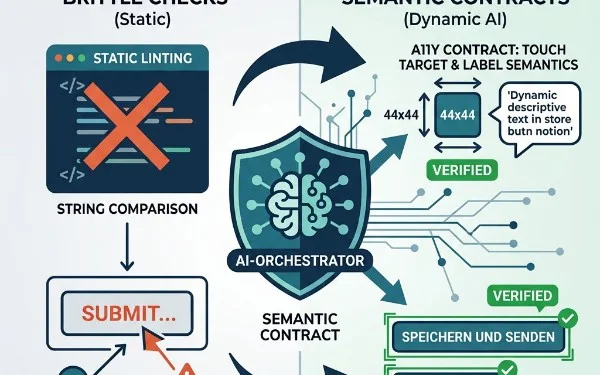
Switching from traditional linting to semantic contracts addresses hidden accessibility and localization issues that static checks miss.
The Challenge of Traditional Testing
Picture this: you're in the final countdown to a significant product launch. Everything appears to be on track. Your static accessibility linter runs smoothly, and localization unit tests seem flawless, only for a beta tester to highlight a critical oversight—a button is rendered unclickable because the localized string has expanded beyond the design's touch target. This scenario is all too common in software development, particularly in industries where user experience is paramount, such as technology, gaming, and e-commerce. As deadlines loom, teams often resort to quick, basic checks that promise efficiency but often yield devastating oversights.
The problem emerges from an overreliance on traditional testing methods, which may not adequately reflect real-world user interactions. Developers and product managers often hope to economize time and resources by relying on linting tools and superficial tests. Yet, these tools can create a false sense of security. They're often designed to catch straightforward errors but completely miss contextual failures that arise when disparate elements interact. When localization and accessibility issues slip through the cracks, the fallout can be severe, impacting user satisfaction, brand reputation, and revenue.
Identifying the Limitations
This experience underscored a fundamental flaw in our testing strategy. The reliance on basic string comparisons and standard linting checks was insufficient. Our tests focused solely on text files, neglecting the actual user interface experience. As such, they failed to capture issues tied to how the layout and functionality interact with the user. This narrow scope is problematic, especially when considering the diversity of devices and platforms today, where an application might be accessed on various screen sizes and orientations.
Static checks can easily miss issues that arise during real interactions. For instance, just because a button has a label doesn’t mean it’s easy to click. This discrepancy often goes unnoticed during traditional testing workflows. Testing efforts that focus too much on code syntax or simple presentational aspects miss the bigger picture: user interactions. A button might look great in isolation, but if it’s unresponsive or frustrating to use due to a localization error, the entire user journey is compromised. Testing methodologies that overlook user context are simply setting teams up for failure. And let’s be honest, no one wants to deal with furious users in the wake of a poorly executed launch.
Adopting Semantic Contracts
Realizing this, we shifted to a more dynamic approach through semantic contracts. This fascinating method verifies that the user interface aligns with the expected interactions, expanding beyond the mere existence of labels to ensure genuine usability. By doing so, we are now in a better position to catch the nuanced accessibility and localization issues that static checks can overlook. Semantic contracts represent a paradigm shift towards an interaction-first mindset, emphasizing the relationship between the interface and its behavior rather than just its appearance.
This strategy doesn’t just improve the odds of catching defects; it also fosters a deeper understanding of the end user’s needs. By focusing on how elements should behave, semantic contracts help to ensure that all parts of the interface are interconnected logically and meaningfully. If you're working in this space, you’ll find this focus on practical usability rather than theoretical correctness particularly refreshing.
Moreover, employing semantic contracts encourages closer collaboration between design, development, and testing teams, breaking down silos that typically hinder agile workflows. When everyone is aware of the expected interaction semantics, there's less room for miscommunication and more of an opportunity for collective problem-solving.
Implications for Product Development
The implications of adopting semantic contracts go beyond immediate testing improvements. They suggest a significant cultural shift in how organizations view quality assurance. Teams that embrace this approach can expect to see a notable increase in product quality, ultimately leading to enhanced customer satisfaction and loyalty. When users encounter a reliable and accessible product, they're far more likely to engage with it—and to recommend it to others.
But there's also a broader industry context to consider. As accessibility standards continue to evolve and diversify, staying ahead of compliance issues is paramount. Companies that integrate these kinds of dynamic testing approaches may find themselves not just compliant, but leaders in user-friendliness and inclusivity. In a market that increasingly demands ethical considerations, being proactive about accessibility can remarkably distinguish a brand from its competitors.
Still, this transition to a more nuanced approach won't be without its challenges. Organizations may need to retrain staff and invest in new tools or methodologies to implement these shifts effectively. Balancing the new demands for thorough testing with tight product deadlines can feel daunting. Yet, the long-term benefits often outweigh these initial pains. Remember: if a product is difficult to use, it won’t matter how many features it has.
This seismic shift towards user-centered testing practices stands to reshape how testing and quality assurance are integrated into the product development lifecycle. Companies that cling to insufficient traditional testing methods may find themselves left behind as consumers become increasingly discerning. It's a wake-up call for any organization that aims to survive in a competitive environment. (And this is the part most people overlook.)
Discussion
Sign in to join the discussion.