AgiBot's evolution highlights a fundamental shift from hardware towards data-driven AI systems in robotics, reshaping industry competition.
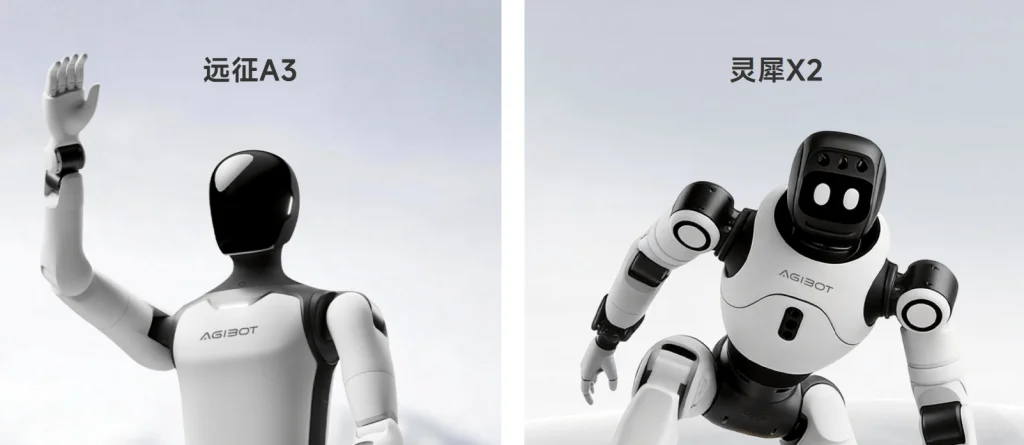
If you think the race in robotics was once all about hardware prowess, AgiBot’s recent advancements suggest that paradigm is shifting rapidly. By 2026, the focus is less on simply constructing humanoid robots and more on integrating advanced AI capabilities that allow these machines to learn and adapt. This transition reflects a broader industry trend where intelligence, rather than mere mechanical prowess, is becoming the primary metric of success.
AgiBot is redefining its role in the tech ecosystem by merging robotics with AI. This year, the company rolled out several noteworthy innovations, including the Expedition A3, and introduced an embodied foundation model, GO-2, aimed at enhancing robots’ task comprehension and execution capabilities. The emphasis here is not just on building better robots, but creating systems that can think, learn, and evolve based on their experiences and the environment around them. This represents a significant departure from the traditional robotics discipline, where robots were largely programmed to perform specific tasks without the flexibility to adapt beyond their original coding.
Another significant release, Genie Sim 3.0, utilizes simulation environments to produce extensive training data. AgiBot's projects — AGIBOT WORLD and the GE-2 Action World Model — are designed to unite data, AI models, and robotic hardware into a cohesive technological framework. The interconnectedness of these projects suggests a strategy that aims to create a more integrated approach to robotics, one where the boundaries between software and hardware blur. The integration ensures that as data flows in, robots can not only process it but also improve their operations in real-time.
Shifting Focus: From Mechanical Design to Intelligent Systems
Traditionally, robotics relied heavily on mechanical design and operational efficiency. The most competitive robots were those that excelled in agility, reliability, and affordability. However, as the industry matures, new challenges come to the fore, particularly concerning how robots interpret their surroundings and learn from experiences beyond their programming. This transition from a purely mechanical focus to one that emphasizes cognitive capabilities is significant. Robotics, it seems, is entering a phase where understanding and adaptability may become the primary currency of competition.
As we move deeper into 2026, the pivotal battleground in embodied AI transitions from pure manufacturing capabilities to cognitive learning capabilities. This shift underscores the escalating importance of data and machine learning and highlights the necessity for robots that are not only task-oriented but also capable of understanding complex environmental cues. If you're working in this space, the implications of this shift are profound. The automation wave will depend less on engineers designing hardware and more on data scientists who train the algorithms that govern robotic actions.
The Data-Driven Evolution
AgiBot’s existing platform, AGIBOT WORLD, has amassed millions of real-world data samples, while Genie Sim 3.0 has reportedly generated over 10,000 hours' worth of simulation data. In its pursuit of unparalleled data production, AgiBot has launched the Hive Data Co-Creation Initiative, aiming for data generation in the tens of millions of hours. This strategy promotes a complete data ecosystem encompassing real-world data collection, simulation training, and iterative model development. The emphasis on this co-creative data approach is not just about quantity; it’s also about quality and applicability, allowing robots to bridge the gap between simulated experiences and real-world tasks.
The cost of acquiring real-world data makes simulation a valuable tool. By enabling robots to experiment virtually before transitioning insights back to physical environments, AgiBot fosters a continuous loop of data, model training, and operational execution. This approach reduces risk and accelerates development cycles. The reality is that simulating environments allows for a broader range of scenarios to be tested without the logistical headaches of manipulating physical hardware. (And this is the part most people overlook.) Investing in simulations isn't just a smart strategy—it's becoming a necessity.
The Competition Landscape
As this cyclical model takes root, the competitive atmosphere within the robotics sector is poised to change dramatically. Companies will not only vie for the best hardware but also for superior data sets, powerful models, and rapid iteration capabilities. This shift indicates a move toward a more complex competitive framework where the companies that can best integrate data with their physical robotics solutions will pull ahead.
AgiBot is not merely curating an array of individual robots; it’s pursuing an integrated architecture that links robotic hardware with data, AI models, and tools for development. This approach builds a stacked ecosystem where physical robots enter the world primed for real challenges, data fuels intelligence, models empower adaptability, and platforms simplify the training and deployment of these machines. As competition warms up, the biggest question remains: which companies will adapt their models fast enough to keep up?
The Path Ahead
This evolving focus marks a departure from the model of conventional robotics companies and aligns more closely with the methodologies found in the AI industry. Nevertheless, this doesn't diminish the importance of reliable hardware. Solid mechanical construction, effective cost management, and scalability remain crucial elements for a robot’s market viability. However, simply building dependable robots won't suffice any longer; companies must also excel in how they handle data and learning capabilities.
Looking ahead, the race won't just hinge on which company can produce the most advanced humanoid robot. Instead, it will be about establishing systems that allow these machines to learn and improve over time. The foundational question now is whether robots can learn, moving past the initial challenges of mere movement. With AgiBot leading this transformational shift, the landscape of robotics is clearly evolving as more companies pivot towards becoming AI-driven entities, reshaping competition and innovation in the field.
Future Implications: A New Era in Robotics
The implications of AgiBot's advancements extend beyond its immediate projects; they signal a broader shift in the robotics industry toward cognitive, learning-based systems. As more companies focus on embedding sophisticated data-driven AI into their robots, we may witness not just improvements in efficiency but also breakthroughs in how these machines interact with their surroundings. If the current trajectory holds, the next phase of robotics could soon blend seamlessly with artificial intelligence, fostering new applications that extend from manufacturing to personal assistance and beyond. What this means for you, the consumer or the industry player, is clear: prepare for a future where the line between programmed behavior and autonomous learning increasingly blurs.
Discussion
Sign in to join the discussion.