LABUBU's captivating debut at the FIFA World Cup opening ceremony underscores China's rising influence in global pop culture, especially among younger audiences.
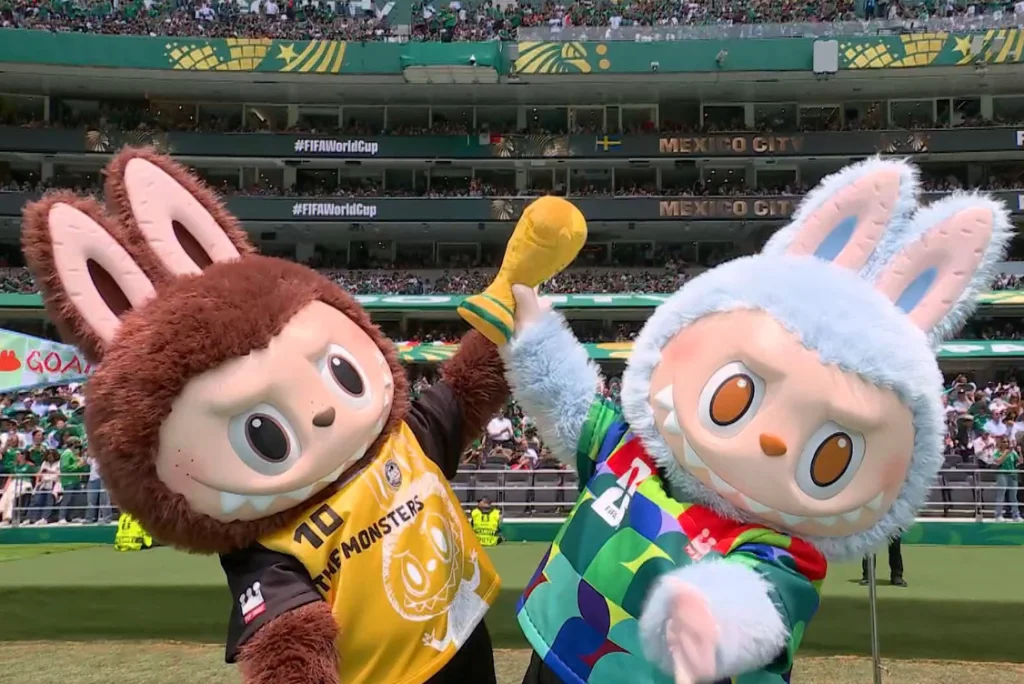
LABUBU's Stage Presence at the World Cup
The excitement of the 2026 FIFA World Cup opening ceremony, held at the iconic Azteca Stadium in Mexico City, reverberated around the globe. Among the national teams vying for attention, a surprising contender emerged in the spotlight: LABUBU, a designer toy intellectual property (IP) from China, captured the imaginations of viewers, particularly in China. This moment wasn’t just about sports; it was about culture, branding, and what it means for a burgeoning market.
A Creative Collaboration
Designed by acclaimed artist Kasing Lung for POP MART, LABUBU made a memorable entrance featuring two oversized mascots. One donned Argentina’s national jersey, proudly hoisting the FIFA World Cup Trophy, while the other wore Mexico's vibrant colors and carried a bucket of popcorn. Their playful antics quickly drew cheers from the crowd. This marked a historical moment—the first time a Chinese original IP has graced a FIFA World Cup opening ceremony since the tournament's inception in 1930. The choice to spotlight LABUBU highlights a strategic push by FIFA to diversify its brand appeal and engage with a younger audience that increasingly values creativity and inclusive representation.
Social Media Buzz
As LABUBU took center stage, Chinese social media platforms exploded with reactions. Hashtags like #LABUBUDebutsAtTheWorldCup quickly climbed to the top of trending discussions on Weibo. Users, infused with humor and national pride, commented on the spectacle, with one quipping, “This is probably the closest China’s national team has ever come to the World Cup.” Such comments pack a punch, reflecting a mix of nationalistic pride and the occasionally tongue-in-cheek attitude of social media users. These interactions reveal how cultural products like LABUBU can transcend typical sporting events and inspire conversations that resonate on a personal level.
Commercial Impact
Following the performance, POP MART announced the launch of a collaborative collection, THE MONSTERS × FIFA World Cup. This included blind boxes and other themed merchandise, available in over 40 countries. Remarkably, online inventory sold out on the very first day, reflecting the strong demand. It’s worth analyzing what this means for POP MART: they’re not just selling toys; they’re cultivating a lifestyle brand that taps into the emotional resonance of global events. This strategy may well set a blueprint for other Asian creative brands aspiring to blend art, consumerism, and international celebrity.
Global Recognition
LABUBU's appearance wasn't just about a commercial partnership; it illustrated FIFA's desire to deepen connections with Asian audiences, especially younger consumers in China. The brand has made significant strides in international markets, particularly in Southeast Asia, Europe, and North America. It’s now a recognizably global designer toy franchise, with LABUBU alone generating roughly RMB 4.81 billion (around $670 million) in revenue in the first half of 2025. The jump from a local appeal to global stature does more than enhance brand equity; it sends a message to other international players that there’s a significant market waiting to be tapped into. The Asian consumer is rapidly evolving, seeking products that resonate beyond traditional domestic boundaries.
Expanding Horizons
In February, POP MART shared that LABUBU surpassed 100 million units sold in 2025, a clear indicator of its growing popularity. This statistic is impressive by any standard, reflecting both quantity and quality in consumer response. As it transitions from being "Made in China" to "Created in China," LABUBU's presence on a world stage not only highlights the international appeal of Chinese original IPs but also signifies the country's expanding footprint in the global creative landscape. What this means for you, whether you're a marketer, consumer, or simply a fan of innovative products, is that the perception of Chinese brands is shifting. They’re becoming synonymous with creativity, cultural significance, and global aspirations—all of which were previously considered the domain of Western brands.
Future Outlook: Broader Implications
LABUBU's journey at the World Cup serves as a microcosm for a larger trend. As more Chinese brands seek to enter the global marketplace, they bring with them unique storytelling and cultural insights that challenge Western narratives. This shift can lead to more diverse options for consumers worldwide and a broader understanding of global culture. As brands like LABUBU continue to gain traction, it also raises critical questions: How will they balance local identities with global aspirations? Can they maintain authenticity while scaling up? And, perhaps most importantly, will they inspire new generations of creators to push boundaries in ways we can't yet imagine?
This isn't merely about a toy. It’s an emblem of change, a testament to the growing power of originality in a space traditionally dominated by established Western brands. As we look to the future, keep an eye on the interplay between culture and commerce, especially as brands navigate these new, uncharted waters.
Discussion
Sign in to join the discussion.