Qwen App enables brands like KFC and Luckin Coffee to create personalized AI agents, enhancing user interaction while simplifying service access.
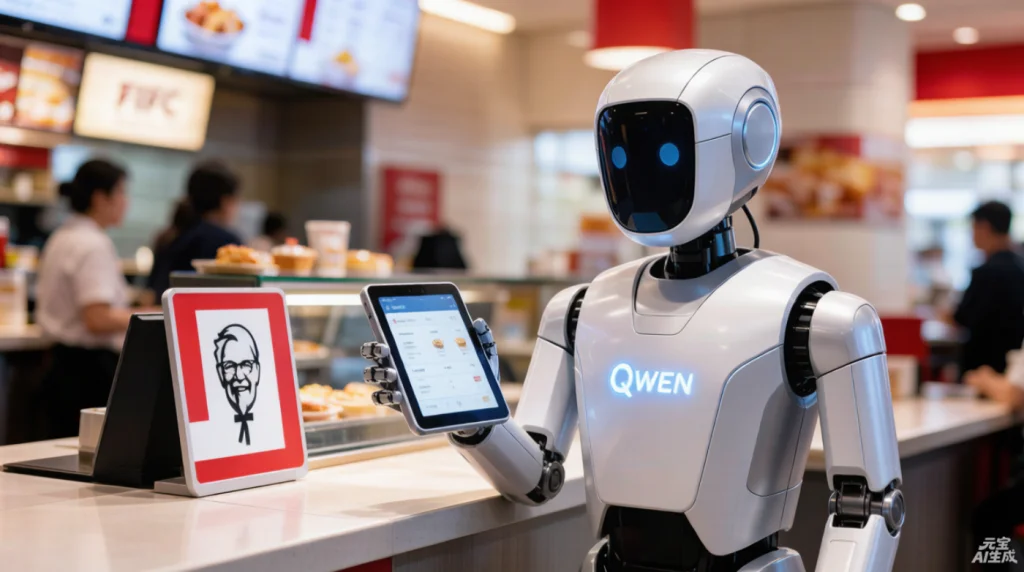
Alibaba-backed Qwen App has recently announced its platform will now accommodate third-party Agents and Skills, paving the way for businesses to deploy their branded AI agents within the application. This development is a notable shift for Qwen, which had previously operated primarily as a standalone AI assistant. The implications of this move could reshape how users interact with AI in everyday tasks.
As part of this initiative, names like KFC, Luckin Coffee, Mixue, and China Eastern Airlines are among the early adopters testing these new services, with full features anticipated to launch shortly. The participation of these well-known brands not only brings them into the AI conversation but also may set a precedent for other businesses to follow suit in integrating similar technology into their operations.
Transitioning Towards a Platform Model
Qwen’s evolution signifies a shift from being a general-purpose AI assistant to integrating various third-party services and workflows. This change highlights a growing trend in the tech industry: the evolution of standalone applications into multifunctional platforms. The goal is to provide users with comprehensive solutions rather than limited functionalities. Companies are already utilizing specialized Skills, enabling users to accomplish tasks like ordering food or booking travel through conversational commands.
A practical example: a Qwen user could request a two-person meal under RMB 60 (about $8.80) from nearby KFC for pickup, with the agent quickly locating options and executing the order. This convenience illustrates how AI can streamline everyday tasks, ultimately driving user engagement. However, what this means for broader market dynamics is still uncertain. Integration with third-party services gives more control to brands over their customer interactions, which may alter the traditional customer service landscape.
Future Agent Services and Personalization
Looking ahead, Qwen plans to enhance its agent services, allowing for more intricate tasks and tailored interactions. This ambition reflects a growing recognition of the need for personalization in digital interfaces. In today’s connected world, generic responses often fail to meet user expectations. For instance, an airline-focused agent could evaluate a user’s travel details, suggesting personalized itineraries. This tailored approach can significantly improve user satisfaction and loyalty.
Moreover, a restaurant agent could provide proactive reminders based on user location and anticipated wait times. This kind of anticipatory service could represent a shift in how users think about technology—not just as reactive tools, but as proactive companions. Additionally, these Agents will retain user preferences, capable of managing trip details, notifying about membership perks, and facilitating repeat orders. This aspect is crucial; if users feel the platform truly understands their habits, they’re more likely to return. The bond formed through such technology can transform the relationship between consumers and brands.
Building on the Alibaba Ecosystem
The Qwen team revealed they've spent recent months tying in numerous Alibaba ecosystem functionalities—mapping, ride-hailing, shopping, and instant retail—cultivating rich experiences in service-oriented engagements. This integration not only enhances the capabilities of Qwen but also aligns with Alibaba's overarching strategy to create interconnected digital experiences. By making these features available, Qwen is positioning itself as a key player in the ecosystem of related services, encouraging users to rely on it for a variety of needs.
By welcoming an array of businesses to develop AI-driven services on their platform, Qwen is taking significant strides toward realizing the vision of a unified chat interface for information access and task execution. This adheres to a broader shift in consumer expectations, where simplicity and efficiency are paramount. But let's be cautious. The actual efficacy of these AI agents in practical scenarios and their acceptance by consumers remains to be seen. Users are often slow to adopt new technologies, especially if they perceive them as intrusive or complex.
Implications and Future Outlook
This initiative has significant implications for the broader AI and tech sectors. As more companies explore similar functionalities, we could see a transformation in how branded content and customer interactions are structured. If Qwen can successfully attract more businesses and users, it might establish a model that others will want to replicate—essentially a new paradigm for consumer engagement through AI. However, challenges such as user privacy, data management, and consumer trust will be critical hurdles to navigate. Companies in this space need to tread carefully; the balance between providing a personalized experience and respecting user privacy is delicate.
There's also the issue of scalability. If you're working in this space, you'll want to consider how these AI agents can be developed and updated as needs evolve. The tech may be compelling now, but sustained development will be required to keep users satisfied over time. And if part of the hype around Qwen's announcements fades, what will keep users returning? The answers to these questions will likely shape the future of AI applications across various sectors.
Discussion
Sign in to join the discussion.